

ACE-Lab Community Ideas are better when they leave the lab.
Teaching, research, projects and ideas from the ACE-Lab community.
No posts in this category yet.
Latest updates
News, workshops, talks, publications and community posts
inLinkedIn· 23 Sep 2026ResearchinLinkedIn· 15 Sep 2026WorkshopinLinkedIn· 7 Sep 2026CommunityACEACE-Lab UpdateWorkshop 25 August 2026
EUCA-Supported ACE-Lab Workshop Series Launched
Registration is open for a series of free, hands-on ACE-Lab workshops exploring practical Model-Based Control Engineering using MATLAB, Simulink and real control hardware.
Read full updateShow less
ACE-Lab has launched a new series of practical control engineering workshops supported by the European Control Association (EUCA).
The workshops are designed to explore how hands-on experimentation can be integrated with model-based control engineering using MATLAB, Simulink and low-cost control hardware.
Each workshop provides participants with the opportunity to work directly with the ACE-Lab platform and consider how practical activities can be used to connect control theory, simulation and implementation.
The sessions will explore the progression from fundamental control concepts through to practical controller design, testing and model-based design, while also considering how these activities can be incorporated into engineering curricula.
The workshop series forms part of the wider development of ACE-Lab as an approach to practical automatic control engineering education, with a particular focus on making control engineering more applied, accessible and engaging from the outset.
The workshops are free to attend, although places are limited.
inLinkedIn· 23 Jul 2026WebinarACEACE-Lab UpdateRecording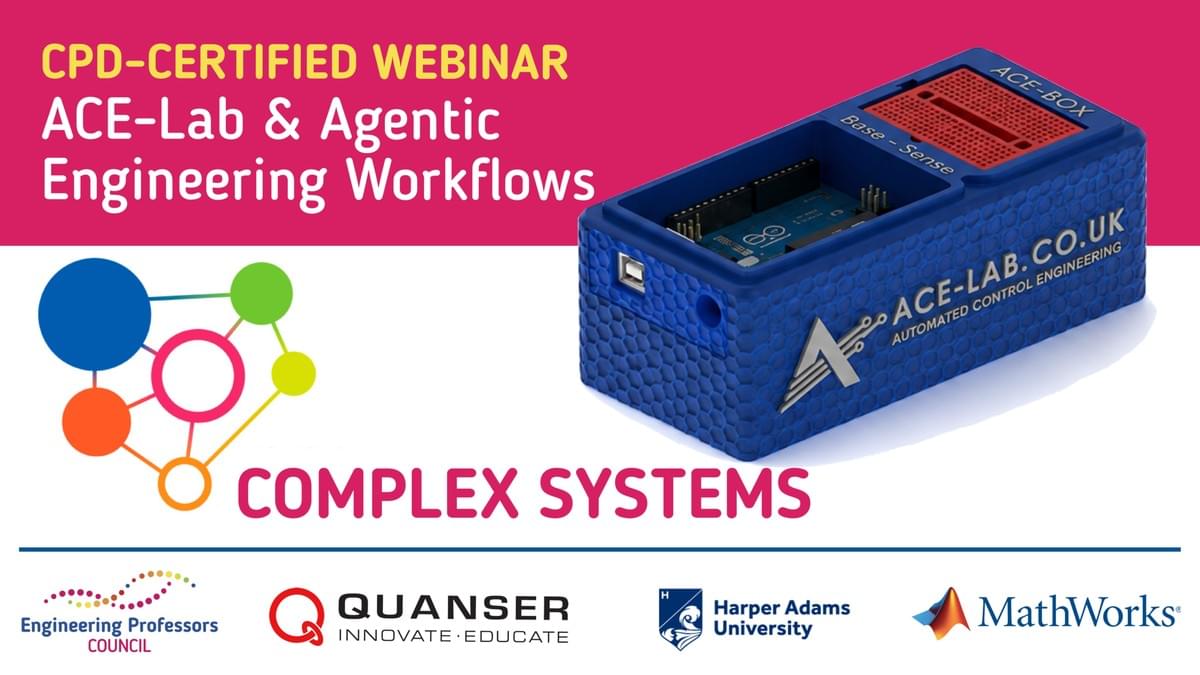 19 July 2026
Recording Available for Delivered CPD-Certified Webinar
Access the ACE-Lab and Authentic AI invited talk recording and related information.
Read full updateShow less
The recording of the CPD-certificated webinar ACE-Lab and agentic engineering workflows, delivered for the Engineering Professors' Council, is now available.
ACEACE-Lab UpdateGuest lecture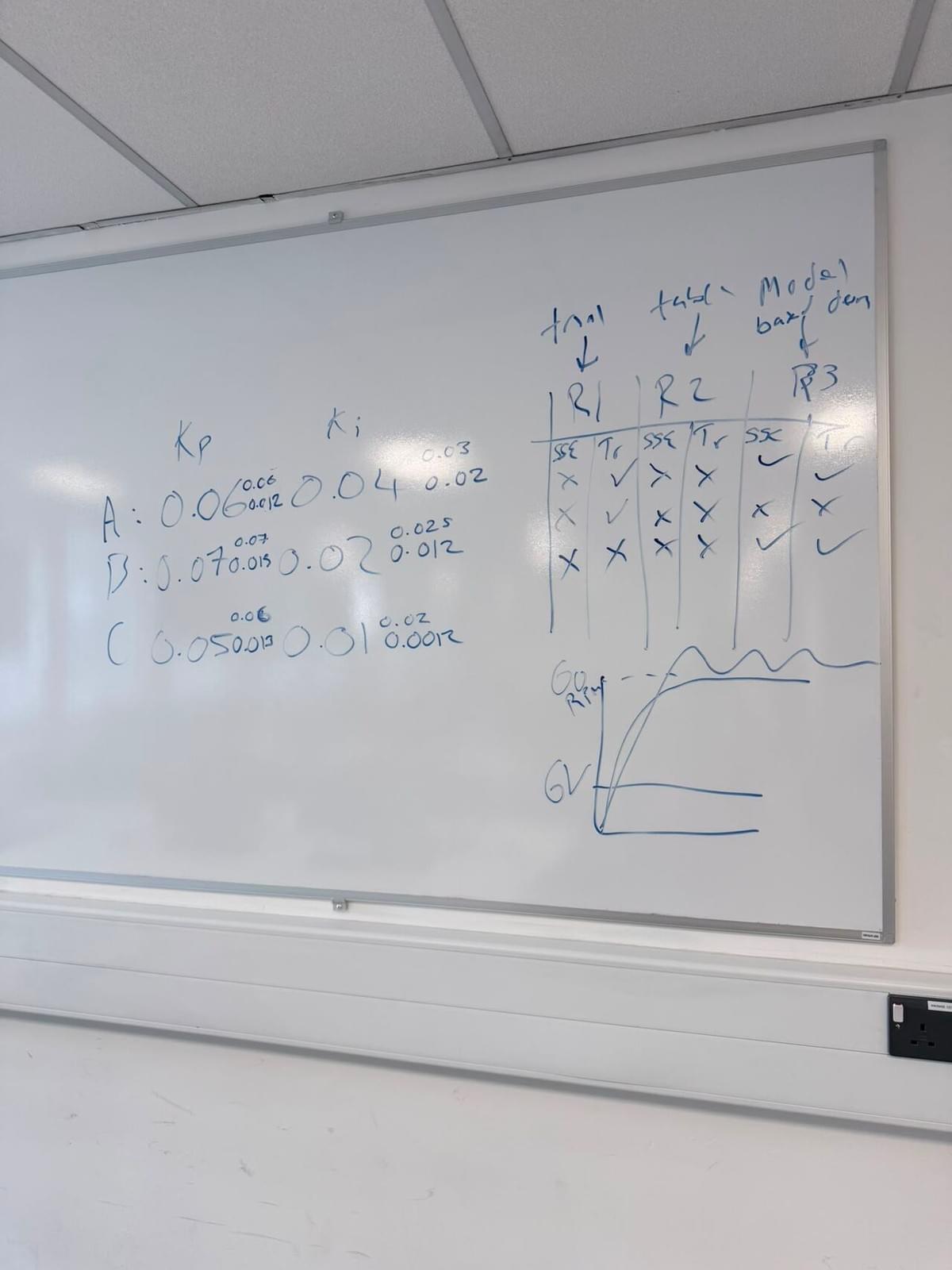 16 July 2026
Aston University Guest Lecture on Autonomous Vehicle Control
Invited guest lecture on the Future Vehicle Technologies MSc using ACE-Lab to explore DC motor speed control, controller tuning and model-based design with MATLAB and Simulink.
Read full updateShow less
ACE-Lab was used as part of an invited guest lecture at Aston University on the Future Vehicle Technologies MSc, exploring practical approaches to autonomous vehicle control.
The session focused on motor speed control and path tracking, with students using MATLAB, Simulink and the ACE-Lab hardware to work through a practical DC motor speed-control exercise.
Students began with a PI controller whose initial gains did not satisfy the required system performance. They then progressively improved the controller using three approaches: tuning from prior knowledge and observation, applying their understanding of how controller gains influence system response, and finally adopting a model-based design approach.
For the model-based stage, students identified a mathematical model of the motor using linear least squares, tuned the controller in simulation and then validated the resulting controller on the physical hardware.
The exercise provided a practical route through several important control engineering activities, including requirements capture, modelling, simulation, controller tuning, delays and implementation effects, testing and validation.
Within the 90-minute session, students progressively improved the controller until the required performance was achieved.
The activity demonstrated how relatively simple hardware can be used to connect fundamental control theory with the wider engineering process required when controllers are implemented on real systems.
 ACEACE-Lab UpdateSymposium
 9–10 July 2026
ACE-CORE Presented at EERN Symposium 2026
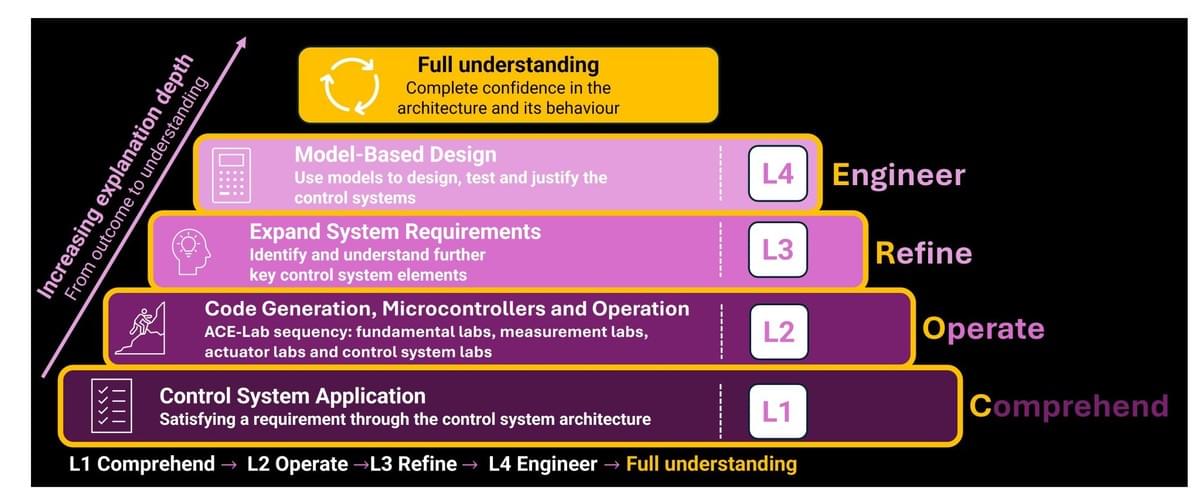
Introducing ACE-CORE: a structured framework connecting application-led control engineering, hands-on ACE-Lab hardware and progression towards model-based design.
Read full updateShow less
ACE-CORE was presented at the 2026 Engineering Education Research Network Symposium as a structured approach for connecting practical automatic control engineering training with deeper engineering education.
Automatic control engineering theory remains fundamental, but learners can develop a stronger understanding when theoretical concepts are connected to practical hardware from the beginning of their learning journey.
ACE-CORE provides a structured framework for supporting this progression through four stages:
Comprehend → Operate → Refine → Engineer
At the Comprehend stage, learners establish an understanding of the control problem, system requirements and fundamental concepts. The Operate stage introduces practical interaction with the control system and its hardware.
Learners then move to Refine, where controllers, models and system behaviour are progressively improved. Finally, the Engineer stage introduces more advanced engineering activities, including modelling, system identification, simulation, controller design and model-based design.
The approach combines application-led learning, portable low-cost ACE-Lab hardware and the structured ACE-CORE methodology.
Rather than treating practical work as an activity that follows the theory, ACE-CORE places practical engagement within the learning process from the outset and then uses it as a route towards increasingly sophisticated engineering analysis.
The aim is to help learners progress from practical control engineering training towards the deeper understanding required to make appropriate, evidence-based engineering decisions.
The accompanying paper, Bridging Training and Education in Control Engineering through a Structured Comprehend-Operate-Refine-Engineer (CORE) Framework, provides further detail on the approach.
ACEACE-Lab UpdateWorkshop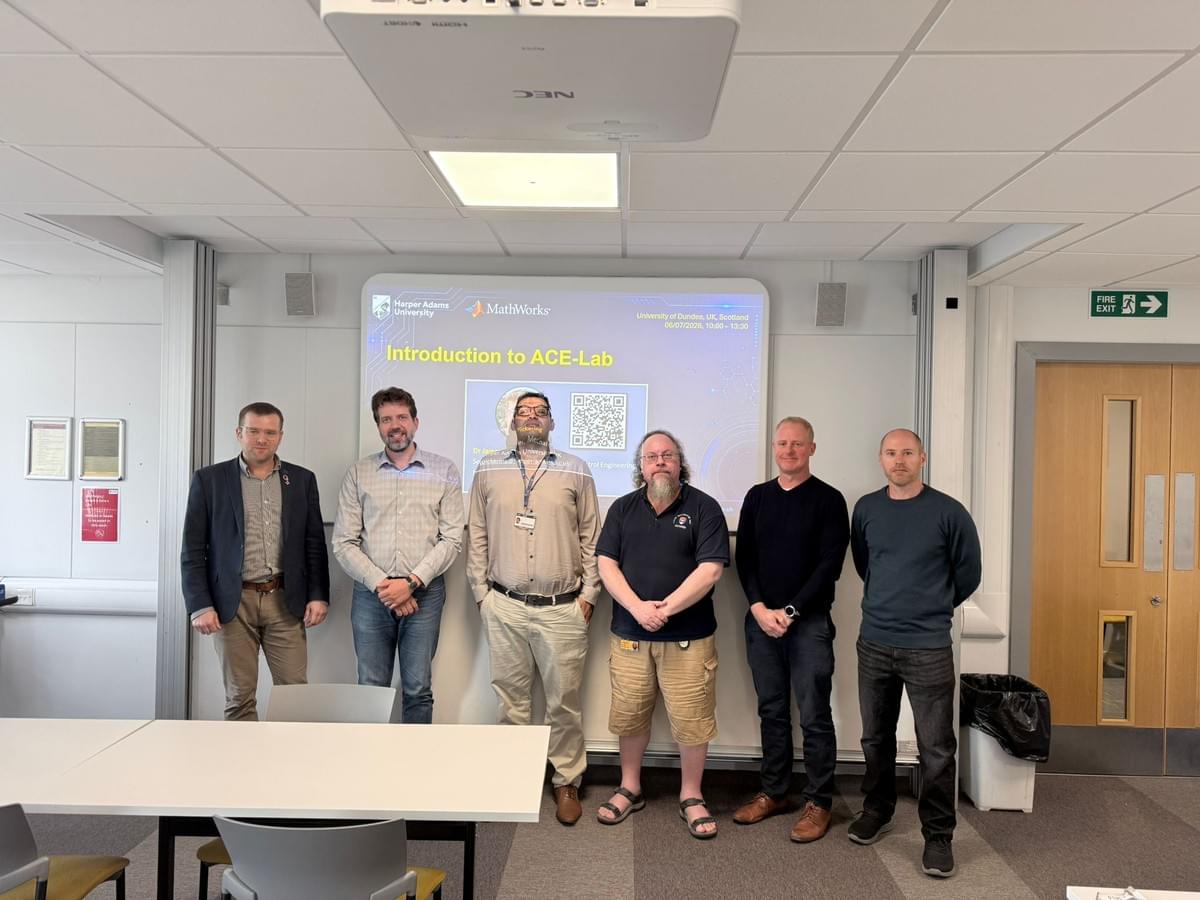 6 July 2026
ACE-Lab Workshop at the University of Dundee
A hands-on workshop exploring how MATLAB, Simulink and ACE-Lab can connect control theory with practical implementation and introduce real hardware and engineering constraints from the outset.
Read full updateShow less
An ACE-Lab workshop was delivered at the University of Dundee exploring how practical control engineering can be introduced earlier within the engineering curriculum.
A central theme of the workshop was that students should encounter the realities of practical control systems alongside the underlying theory, rather than only meeting real hardware towards the end of a module or programme.
Practical control systems introduce effects that are difficult to appreciate fully through theory and simulation alone. Sensors, actuators, sampling, noise, delays, hardware limitations and implementation constraints all influence the behaviour and performance of a real control system.
The workshop explored how ACE-Lab can be used to bring these effects directly into the learning process.
MATLAB and Simulink were used alongside the ACE-Lab hardware to demonstrate how learners can move from control theory and simulation towards practical implementation. In particular, the session considered how Simulink code-generation tools can support the transition from a simulated controller to a controller operating on real hardware.
The workshop also provided an opportunity to discuss emerging ACE-Lab teaching methods and how practical activities can be structured to support more applied, engaging and industry-relevant control engineering education.
The wider aim is to help students understand not only how to design a controller, but also how that controller behaves once it leaves the simulation environment and is implemented on a physical system.
Introducing these ideas early provides learners with a practical context for the theory that follows and helps establish a clearer connection between mathematical control engineering and real engineering systems.
ACEACE-Lab UpdateConference 2–3 July 2026
ACE-Lab Demonstrated at Practical Engineering Education Conference 2026
ACE-Lab was demonstrated at the University of Edinburgh, supporting discussions around hands-on control engineering education and progression from theory to practical understanding and applied engineering.
Read full updateShow less
ACE-Lab was demonstrated at the Practical Engineering Education Conference 2026 at the University of Edinburgh, providing an opportunity to discuss practical approaches to control engineering education with colleagues from across engineering higher education.
The event also provided an opportunity to reflect on the role that ACE-Lab should play within the learning process.
ACE-Lab was originally developed to help students understand the fundamental processes involved in automatic control engineering through practical, hands-on experimentation.
The intention is not for the ACE-Lab hardware itself to become the final application. Instead, it provides a controlled and accessible environment in which learners can build confidence with fundamental ideas before progressing towards more complex engineering systems.
For example, learners might first investigate sensing, actuation, feedback, controller tuning and system behaviour using an ACE-Lab exercise before transferring that understanding to a larger application such as an autonomous vehicle.
This creates a learning journey from control theory → practical understanding → applied engineering.
The demonstration at PEE2026 therefore reinforced an important principle within the continuing development of ACE-Lab: the equipment is a tool for learning rather than the destination.
Its value lies in providing a bridge between abstract control theory and the more complex engineering applications in which that theory must ultimately be used.
EPCEngineering Professors' CouncilWebinar29 June 2026ACE-Lab and agentic engineering workflows
A CPD-certificated webinar exploring practical engineering workflows from requirements capture through to verification and validation.
Using ACE-Lab alongside MATLAB and Simulink, the session demonstrates key stages of the engineering workflow and explores how AI agents can support modelling, simulation, analysis and iterative engineering design.
Watch the recordingEPC · VimeoACEACE-Lab UpdateInvited talk 21 January 2026
Recording Available for Invited Talk
Access the ACE-Lab invited talk recording and related information.
Read full updateShow less
For the International Federation of Automatic Control (IFAC) Control Education Technical Network, Dr James E. Pickering delivered an update on the project.
Abstract
Lower hardware costs and the rapid expansion of open-access learning resources are fundamentally reshaping control engineering education, enabling students to engage directly with real systems rather than learning control concepts solely through abstract theory. In response to this shift, the Automatic Control Engineering Laboratory (ACE-Lab) was launched in the United Kingdom in 2025 as an online-focused educational ecosystem, bringing together a growing consortium of higher education and industry partners committed to advancing applied control engineering education.
ACE-Lab is structured around three integrated elements: ACE-CORE, a methodological framework that defines the learning progression in applied control engineering; ACE-Box, a low-cost, portable hardware platform that enables hands-on engagement with sensors, actuators, and embedded control; and ACE-Apply, an applications layer that contextualises learning through authentic engineering applications.
This talk introduces the ACE-Lab ecosystem, with particular focus on the ACE-Box platform. The session presents the system architecture, outlines representative MATLAB and Simulink-based teaching activities, and demonstrates how ACE-CORE and ACE-Apply are used alongside the ACE-Box to support a structured learning pathway from foundational control concepts to authentic engineering applications.
ACEACE-Lab UpdateArticle 9 December 2025
Article Contribution
A featured article contribution connected to practical automatic control engineering education.
Read full updateShow less
An article based on ACE-Lab has been included in the Complex Systems Toolkit for the Engineering Professors' Council.
EPCEngineering Professors' CouncilArticle8 December 2025Practical control engineering education through the ACE-Model
An EPC teaching activity presenting a systems-driven, application-focused framework for practical control engineering education.
The approach connects practical experimentation, structured learning processes and engineering applications to help students progress towards systems thinking and model-based design.
- Connects control theory with practical engineering activity and physical systems.
- Develops systems thinking, integration and model-based design skills.
- Links the learning approach with AHEP4 and INCOSE competency areas.
ACEACE-Lab UpdateInvited talk 15 January 2025
Recording Available for Invited Talk: Prior Work
View the earlier ACE-Lab invited-talk recording and supporting materials.
Read full updateShow less
This recording is based on earlier work on the Control-Lab-in-a-Box (CLB) platform. The presentation was delivered in the MathWorks Special Session at the 2024 European Control Conference.
Abstract
The teaching of autonomous vehicle (AV) control algorithm design involves the drawing together of multiple topics from both theory and practice. To enable an in-depth knowledge of how the control algorithms of an AV operate, a laboratory-scale approach using ‘lab-in-a-box’ has been developed at Aston University for a project-based module on the Future Vehicle Technologies MSc course. The aim of the approach is such that students can learn the control engineering fundamentals before moving onto a larger vehicle platform. Using MATLAB and Simulink, the adopted approach borrows ideas inspired from model-based design for embedded control. Continuous-time and discrete-time simulation tools are used to design what is in effect a real-time control system. Students are also taught ‘model shop’ skills and computer aided design (CAD), thus allowing them to build a physical control system for real-time operation. The focus is on the control of a DC motor, including speed control, temperature control and obstacle avoidance. The learning from the ‘lab-in-a-box’ then allows for the skills to be transferred to a scaled down vehicle, with the Roboworks Rosbot Plus TX platform used. The feedback from students is overall very positive, with the students enjoying the transferrable skills from the ‘lab-in-a-box’ to the Roboworks Rosbot Plus TX platform.
Share your workUsing ACE-Lab in your teaching, research or projects?
Share what you are building, testing, teaching or exploring. Posts from educators, students, researchers and engineers can be featured here as part of the growing ACE-Lab community.